
On Call
Farmer and May’s Lick Fire Chief Jason Gifford is available to his community day and night.
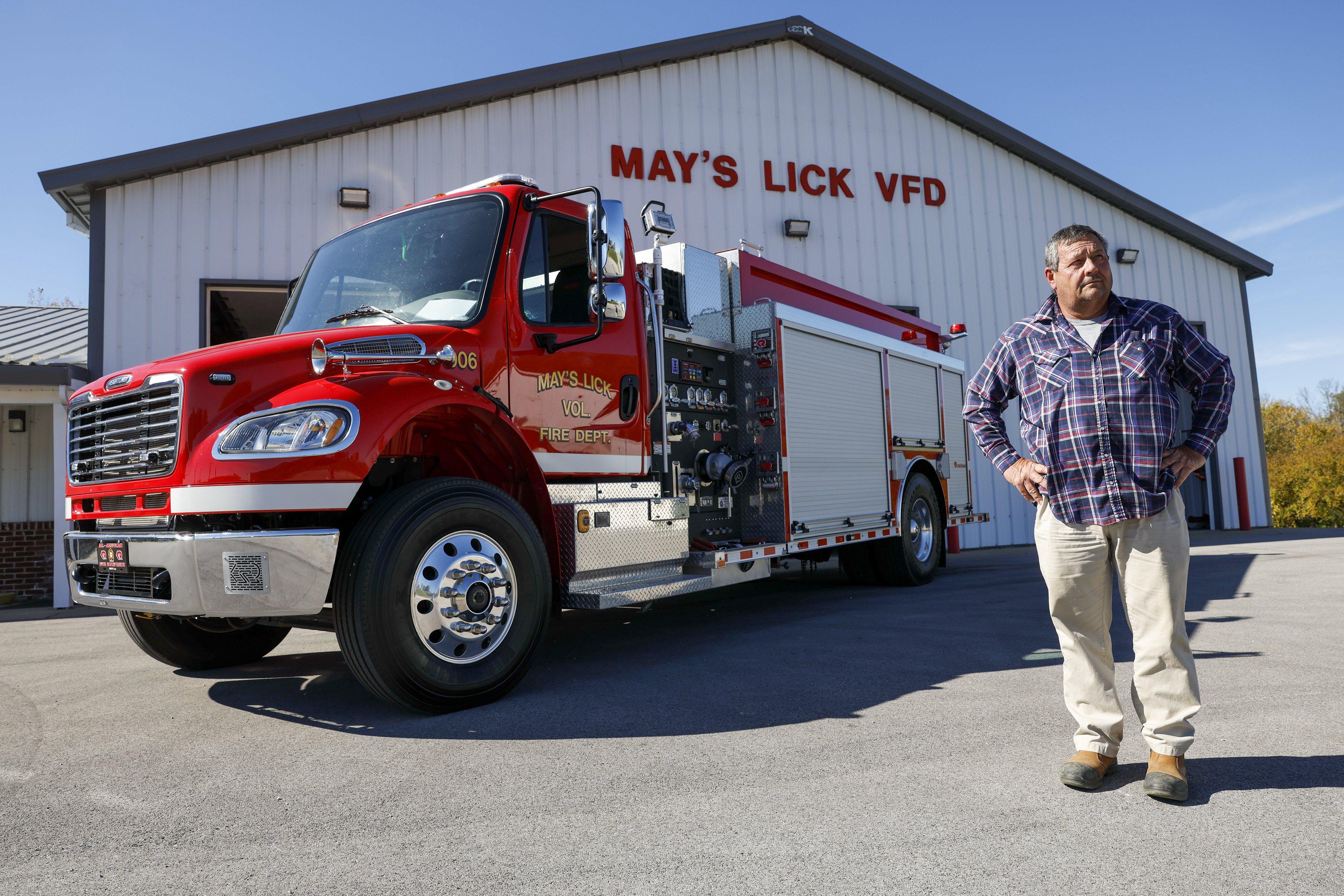
Community is at the center of Jason Gifford’s long list of priorities. As the chief of May’s Lick Volunteer Fire Department and owner of a tobacco and cattle farm, Jason is always on call and the lines between his priorities are blurred.
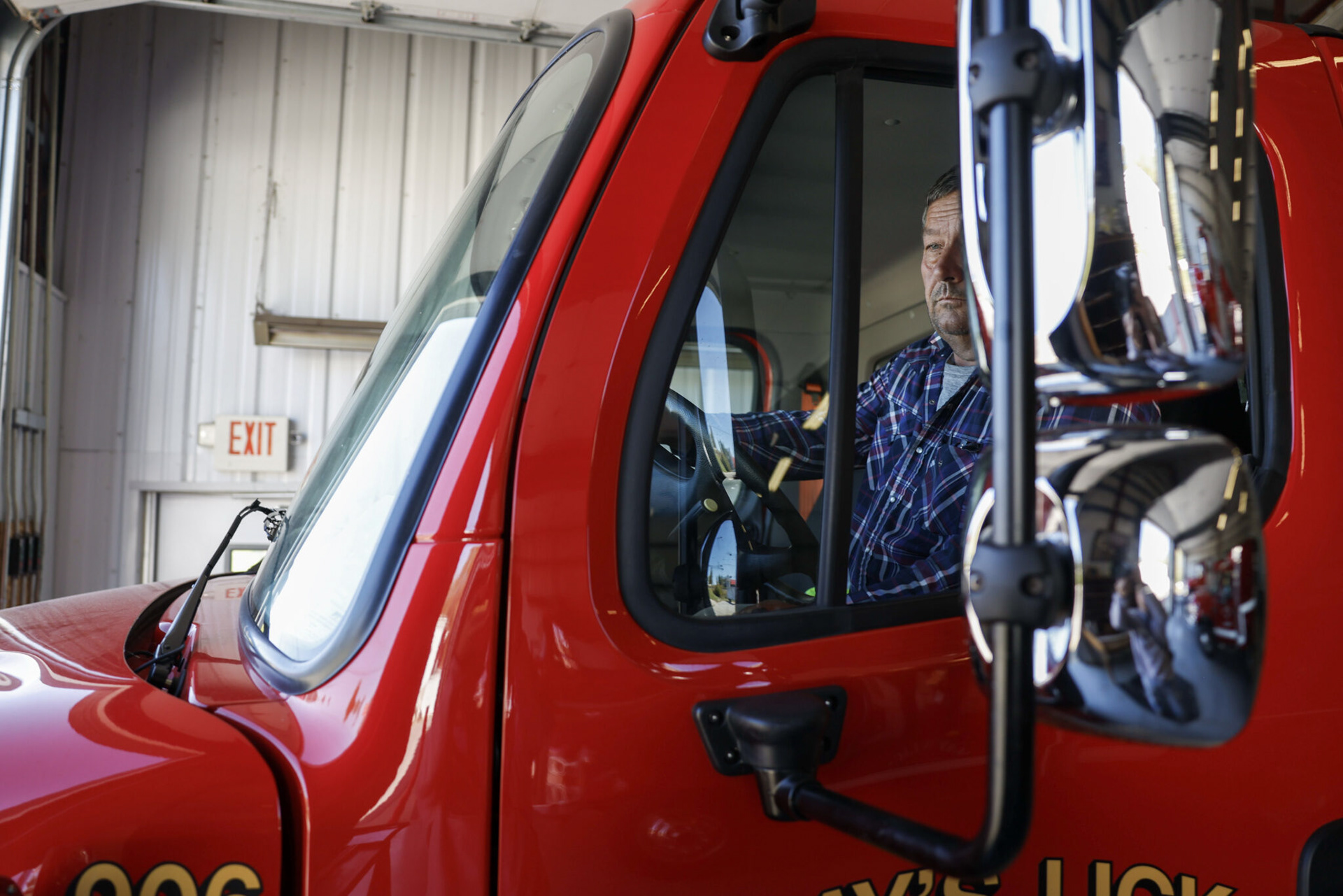
Jason drives one of the department’s fire trucks out of the garage that serves as the volunteer fire department headquarters.
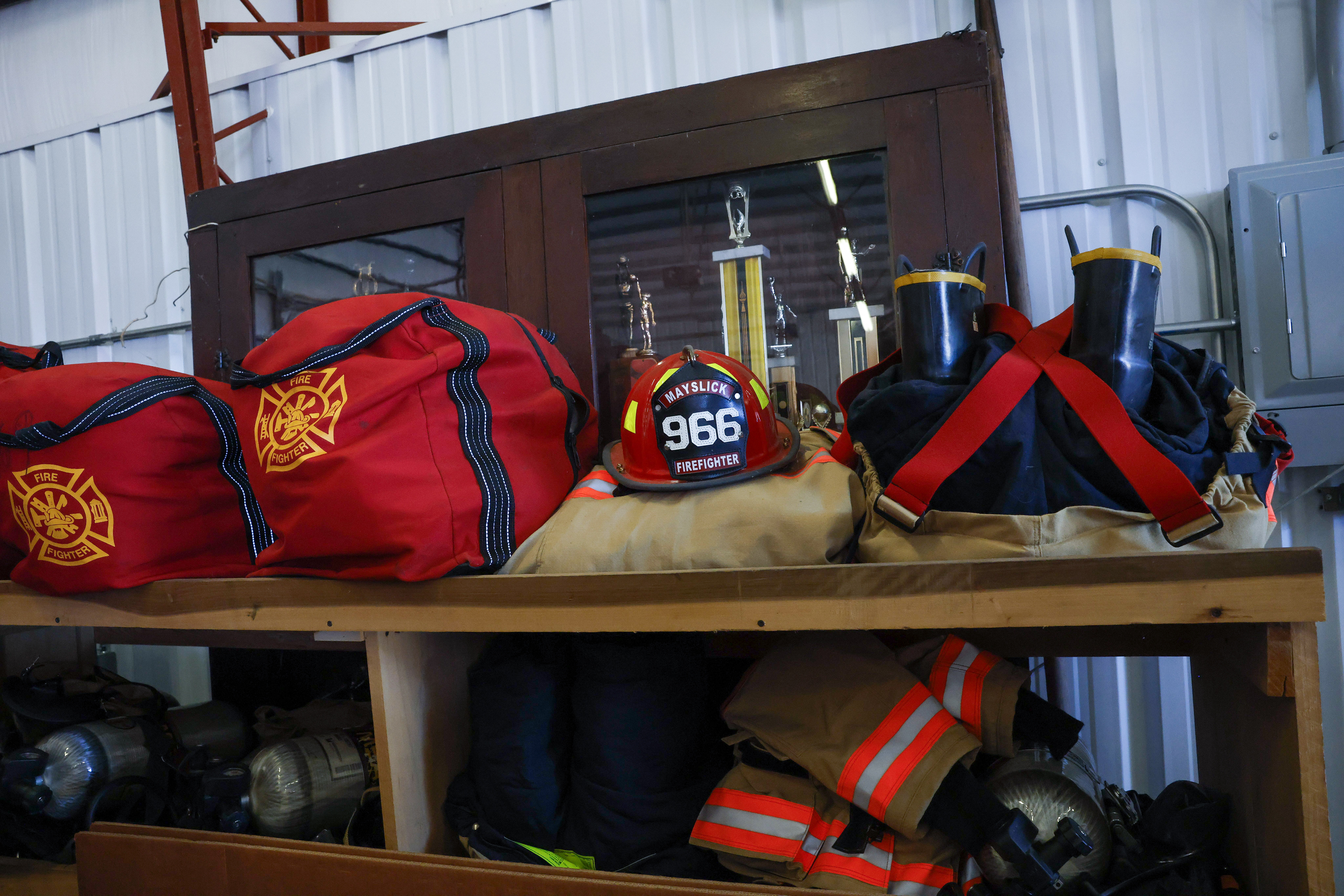
Gear for the May’s Lick fire department volunteers is packed and ready to go when the need arises. Most of the firefighters have other jobs, many related to farming.
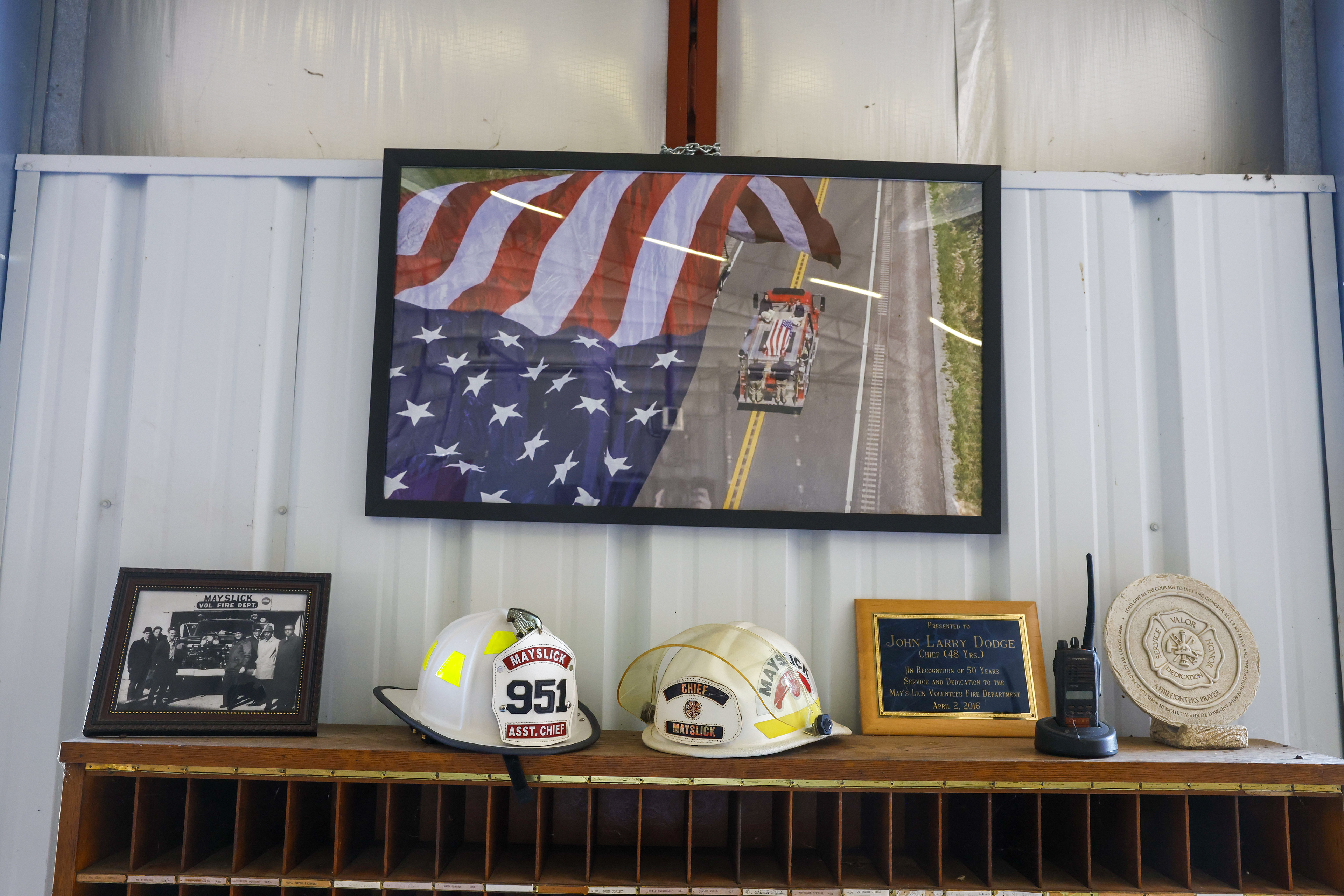
Patriotic symbols and memorabilia are displayed on a shelf in the fire department headquarters. A plaque honors John Larry Dodge who was chief for 48 years.
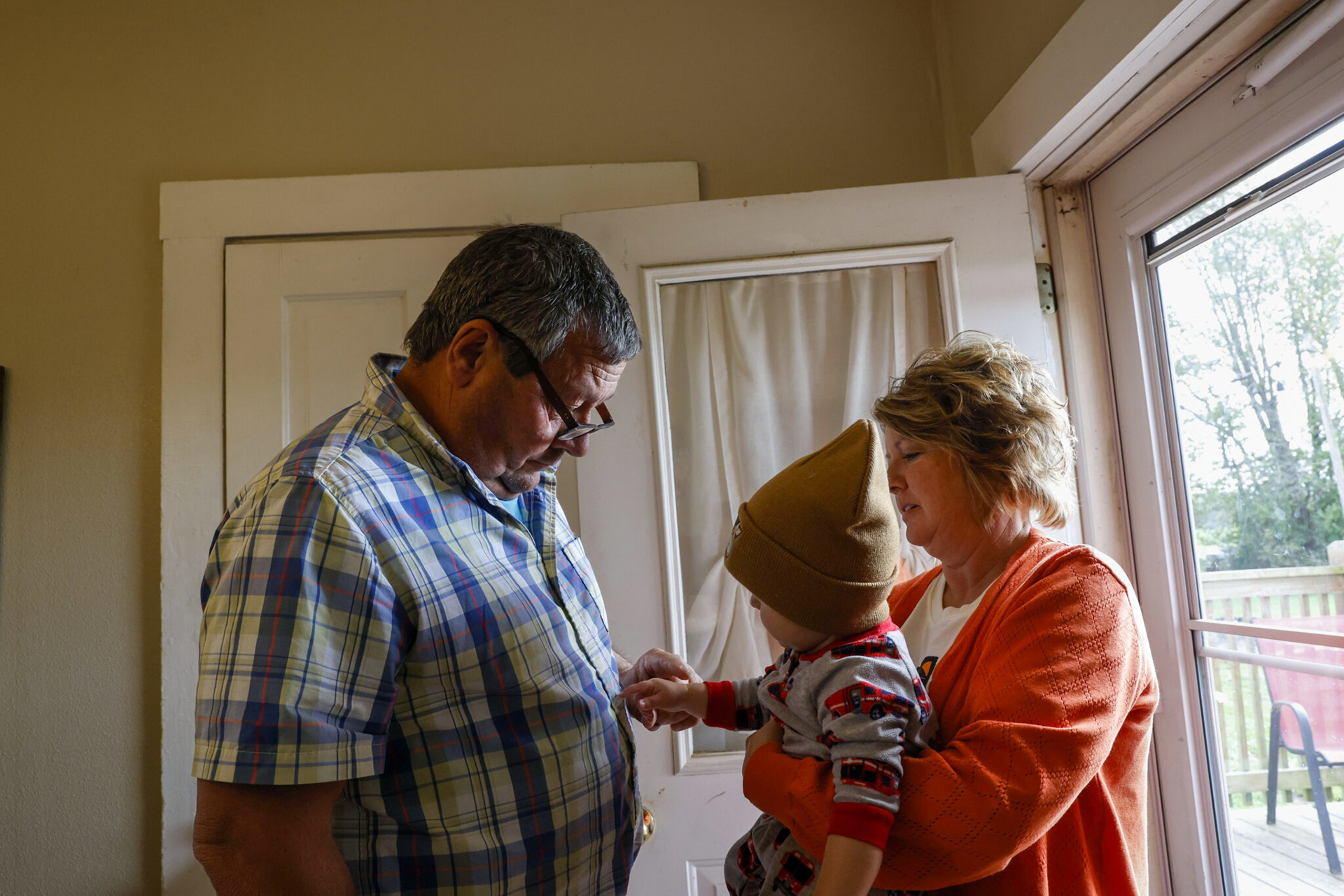
At noon each day Jason goes home for a midday meal with his entire family. In the arms of his grandmother, Melissa Gifford, 11-month-old Jase Massey plays with the buttons on his grandfather’s shirt. This time of day is important to Jason and a needed break from work.
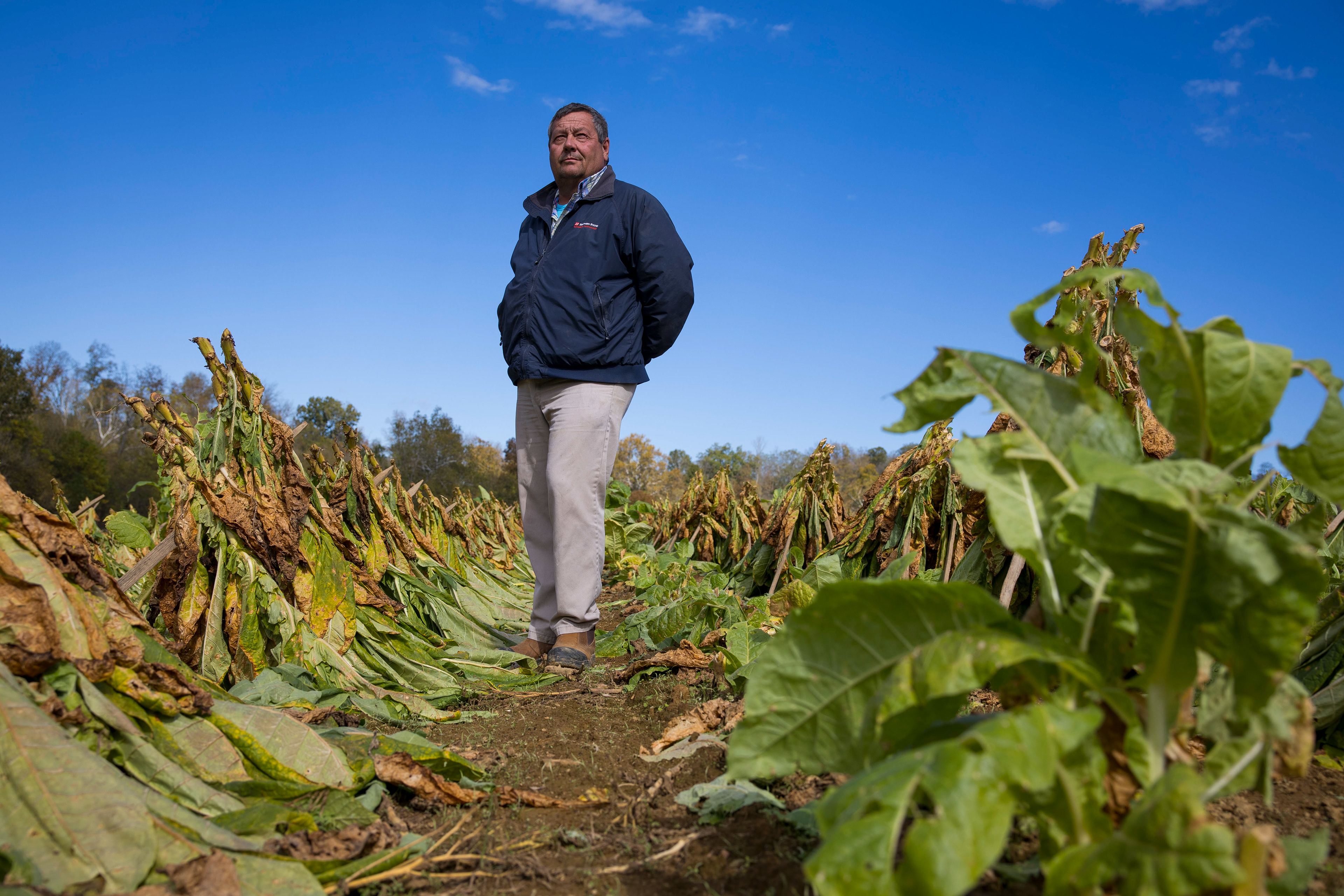
Harvesting tobacco takes top priority every fall as the burley crop on matures. Jason hires seasonal workers to help with cutting and hanging the tobacco in the barn to dry.
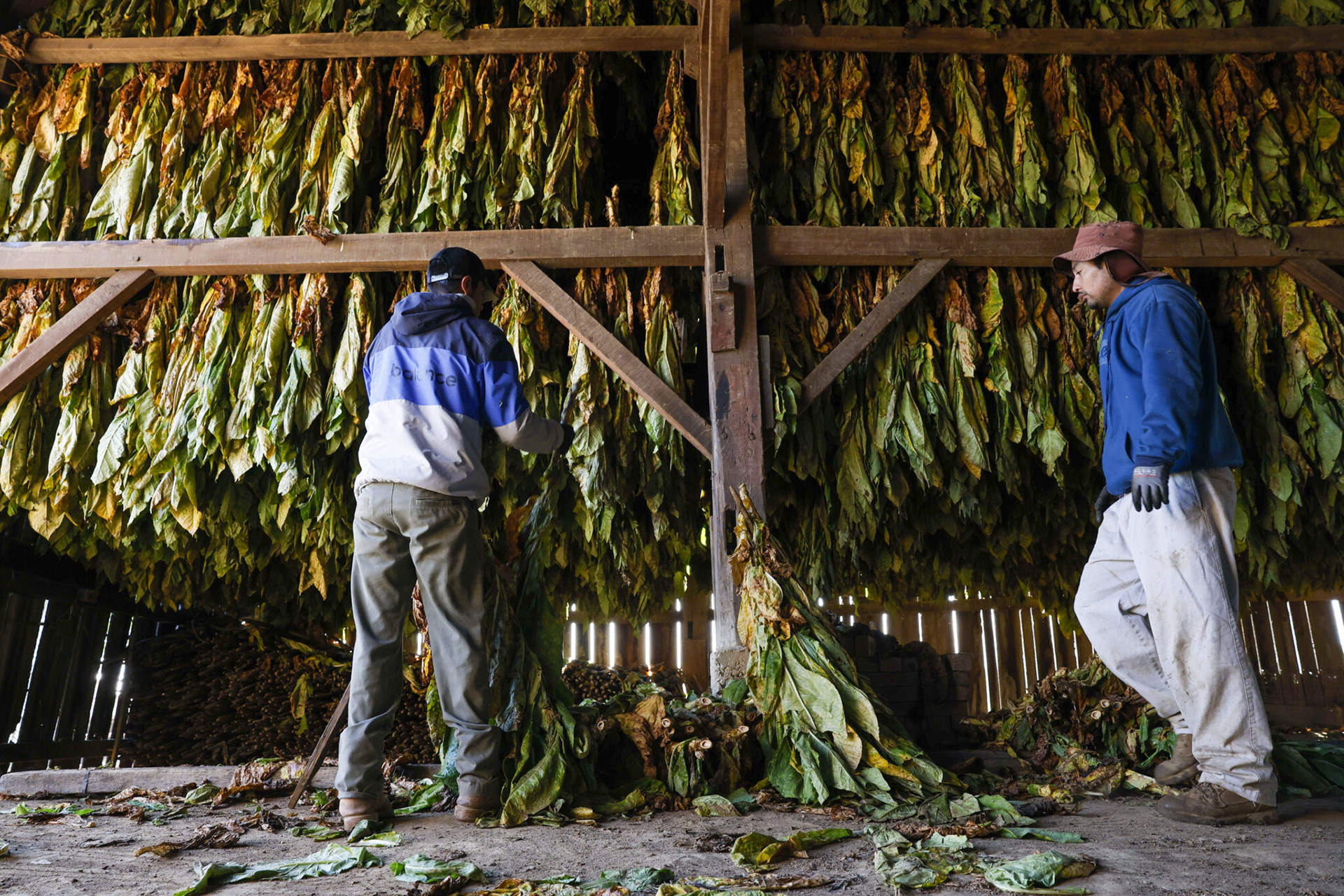
Jesus Rosas Silvero, left, and Eduardo Hernandez hang freshly- harvested tobacco in one of the many barns on Jason’s farm. Originally from Mexico, Silvero and Hernandez are a part of the H-2A federal work program that allows farmers to hire foreign workers for seasonal agricultural jobs.
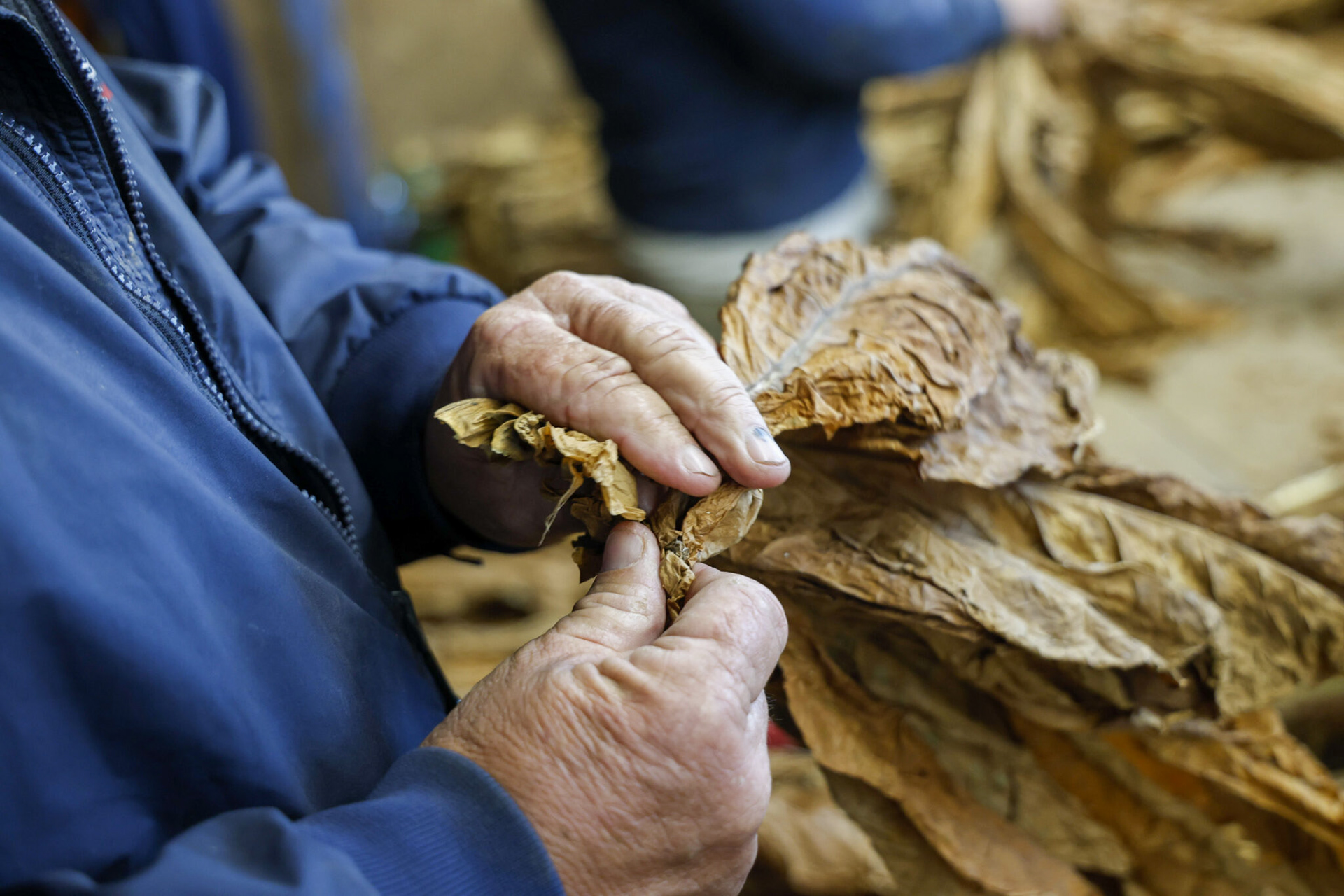
In the final stages of the process, tobacco leaves can’t be too dry or too wet. In a warm room of a neighbor’s tobacco barn, heated by a wood-burning furnace, Jason strips tobacco leaves from their stalks and sorts the leaves into large plastic trash cans. The tobacco is then baled before being packed for shipment.
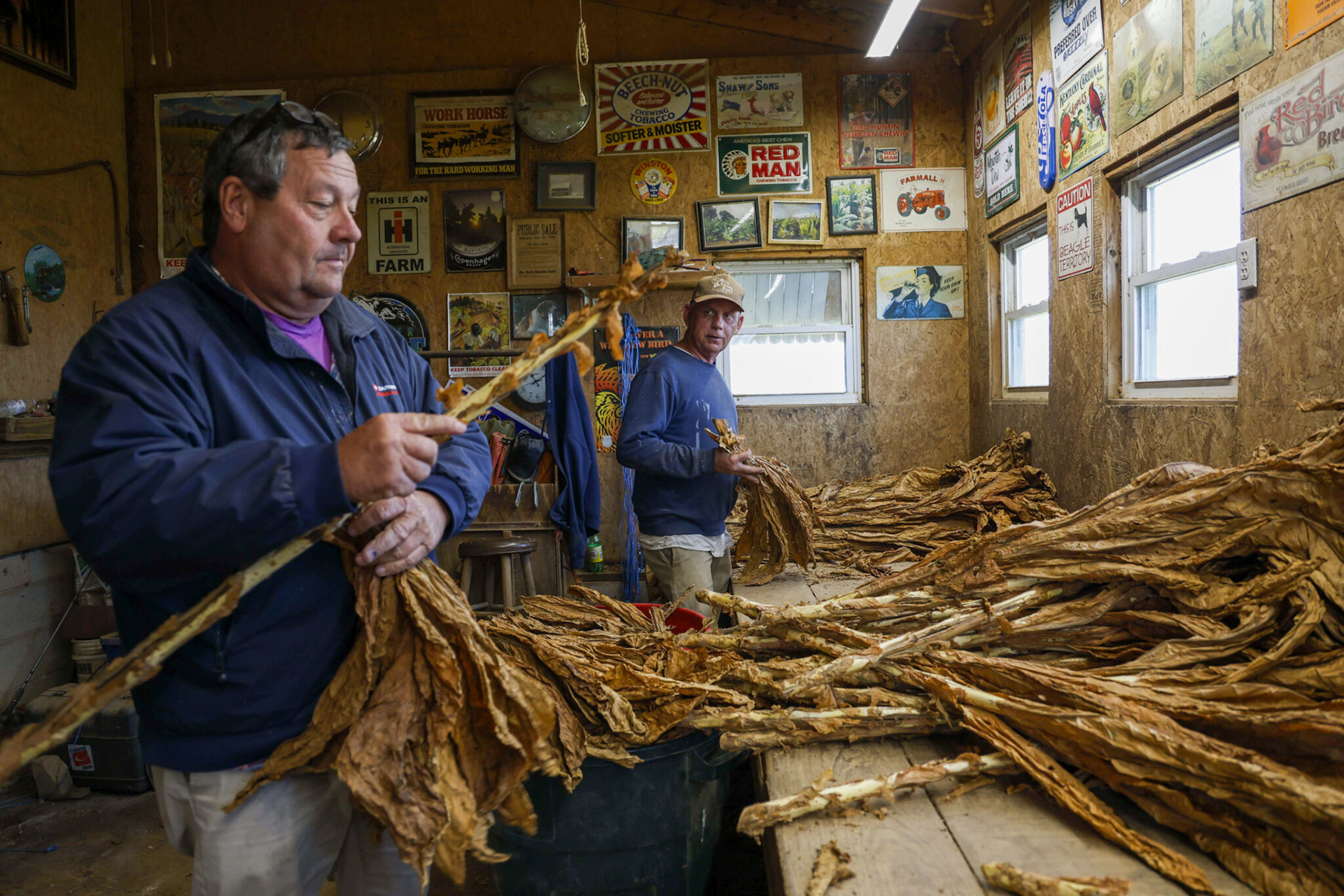
In a barn on his family’s farm, tobacco farmer Mike Miller (right) and Jason strip dried tobacco leaves from their stalks before sorting them in preparation for baling and packing for shipping.
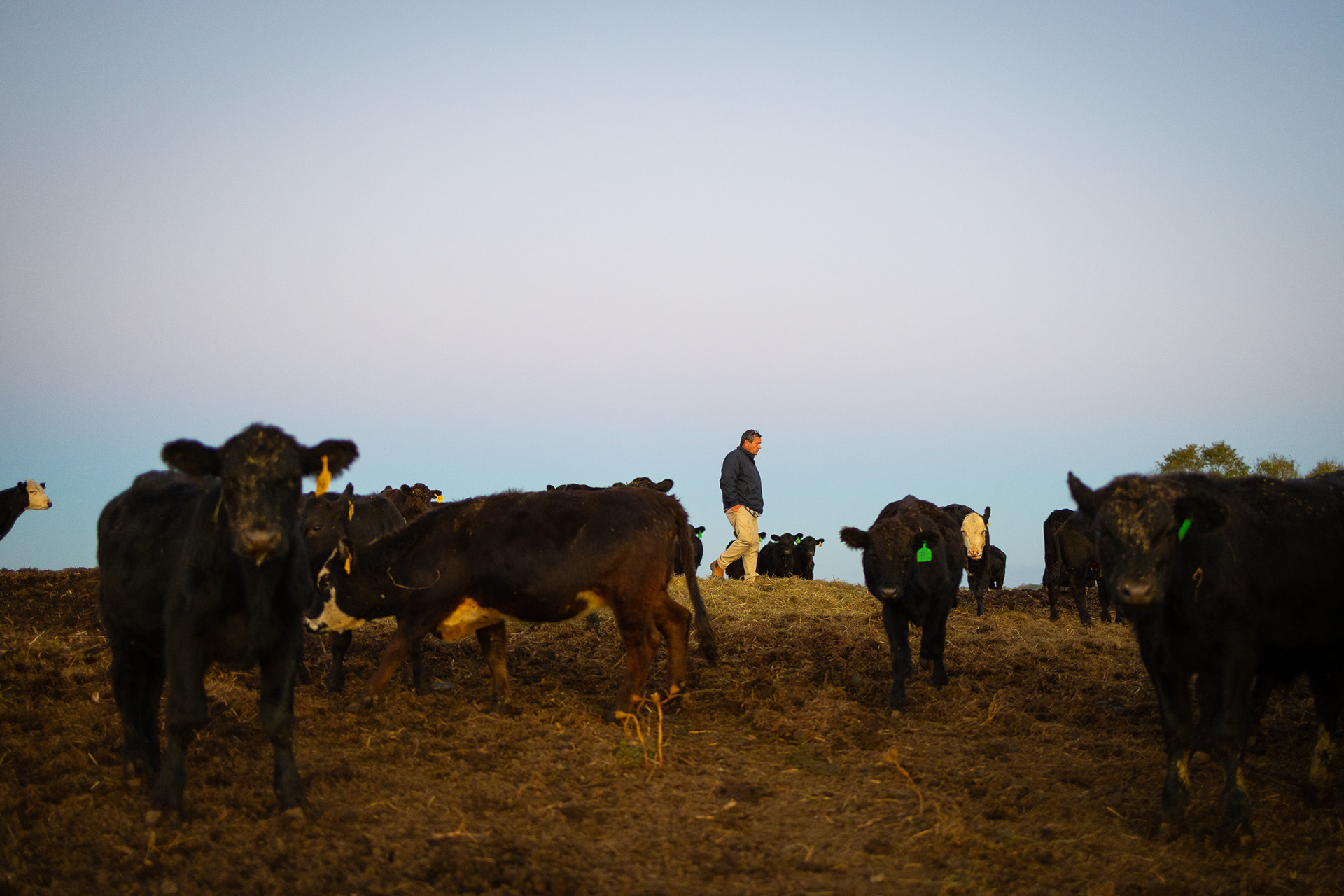
Weaving his way through a group of cattle on a crisp fall morning, Jason completes his daily task of feeding the livestock. Jason owns more than 2,500 acres of farmland where he raises cattle and grows tobacco.
With the grass still coated in dew and his cattle already fed, Jason Gifford drives his Chevy pickup truck down a hill past empty flatbed trailers, stopping just before a field of freshly harvested burley tobacco.
The static and muffled voice of an emergency dispatcher projects from a cell phone sitting in the cup holder. Jason, 55, starts his day just before sunrise, and is quickly reminded of the lines that are blurred among his around-the-clock responsibilities.
Jason owns more than 2,500 acres of farmland on which his family lives, including 260 acres devoted to tobacco. Jason, his wife, Melissa, and their son, John, live in the main farmhouse while daughter Ashley Massey and her husband, Nathan, and their 11-month-old son, Jase, also live on the property. Seventeen migrant workers from Mexico, who work full time growing and harvesting tobacco as part of the H-2A federal work program, live in three houses on the property. The program allows farmers to bring migrant workers to the United States to fill seasonal agricultural jobs.
Just down the road from the farm sits a white building housing the May’s Lick Volunteer Fire Department’s fire trucks. As fire chief, Jason is on call 24/7 listening for emergency calls from his phone, dropping his farming and family duties to make a quick response whenever need be.
Regardless of whether he’s at the firehouse or on a neighbor’s farm, Jason is always at the center of the community that he’s built in May’s Lick. On a sunny fall day he was in a small room in the barn of his close friend Mike Miller as tobacco was stripped from its stalk, sorted, bailed and then packaged for distribution.
“Jason here takes care of us and all the stuff. You know if it wasn’t for Jason, we wouldn’t even be doing this stuff,” Mike said as he and his brother, Ricky Miller, worked on their tobacco. “He’s just about ready to walk on water.”
Tobacco farms have dwindled since 1995 when Jason and his family first moved to their current home. His farm is one of only a handful left in an area where tobacco “was a mainstay of this community . . . We can tell the difference.” Jason said.
Despite the decline, Jason produces approximately 550,000 pounds of tobacco per year, with contracts from large tobacco companies such as Philip Morris USA, R.J. Reynolds and Japan Tobacco International (JTI).
While his farm is successful, other things are more important to him. Jason deeply values his family and those he works with. Throughout his day, he goes on numerous unplanned errands, outside of his normal duties, whether it’s going to get more gasoline for a friend’s lawnmower or helping a neighbor jump their car battery.
“That probably means more than anything we do on the farm,” Jason said. “I think a lot of our community and I try to help do whatever we need to do.”
Back of House in the Forefront
Chautauqua Institution President’s Cottage Executive Chef
Ben Shropshire balances visual, culinary art
Chautauqua Institution President’s Cottage Executive Chef
Ben Shropshire balances visual, culinary art
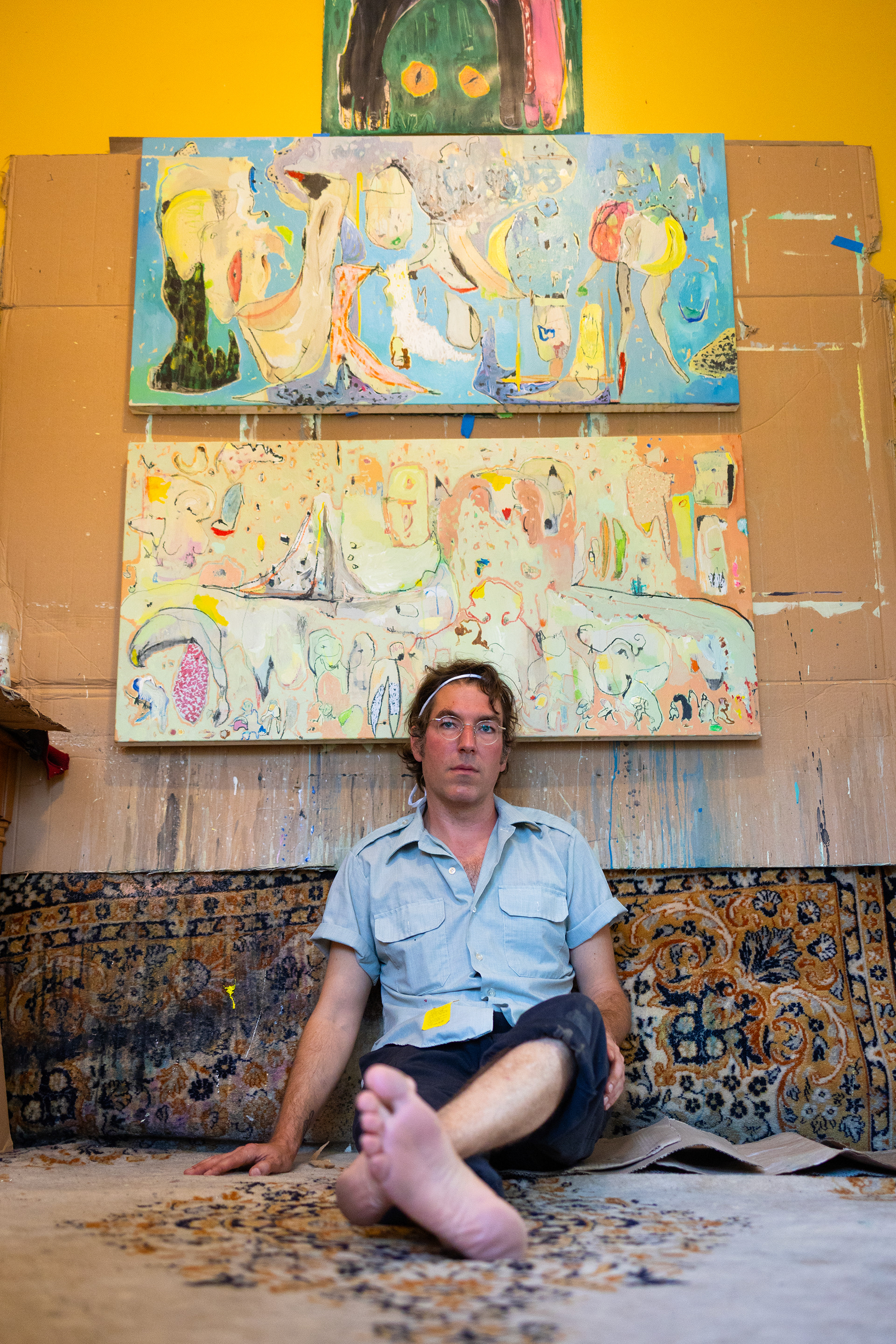
President’s Cottage Executive Chef Ben Shropshire on August 5, 2025 in his apartment, which also acts as his studio.
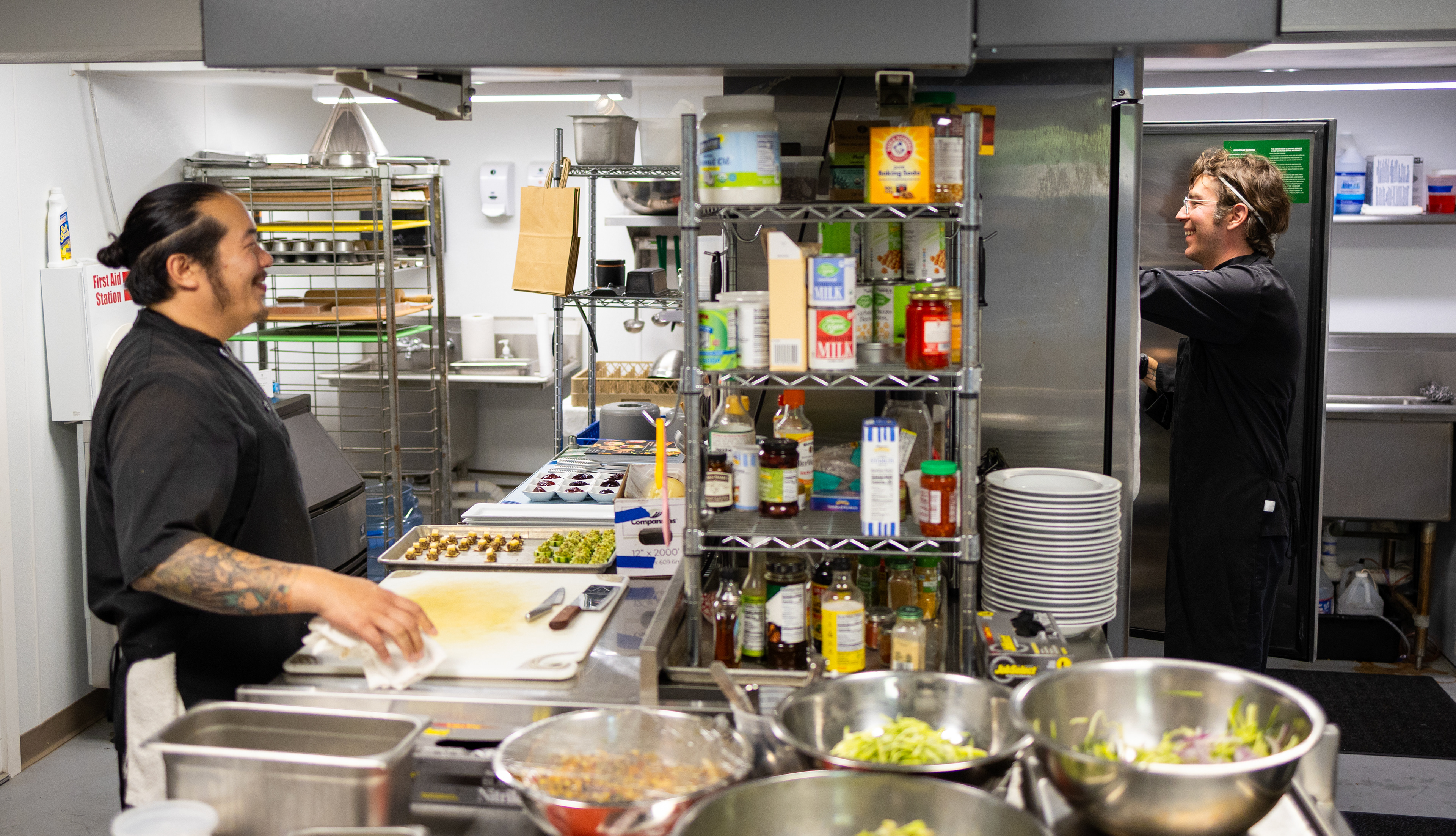
Sous Chef Dan Wongprapan and Shropshire prepare for dinner service on July 23, 2025 in the kitchen of the President’s Cottage.
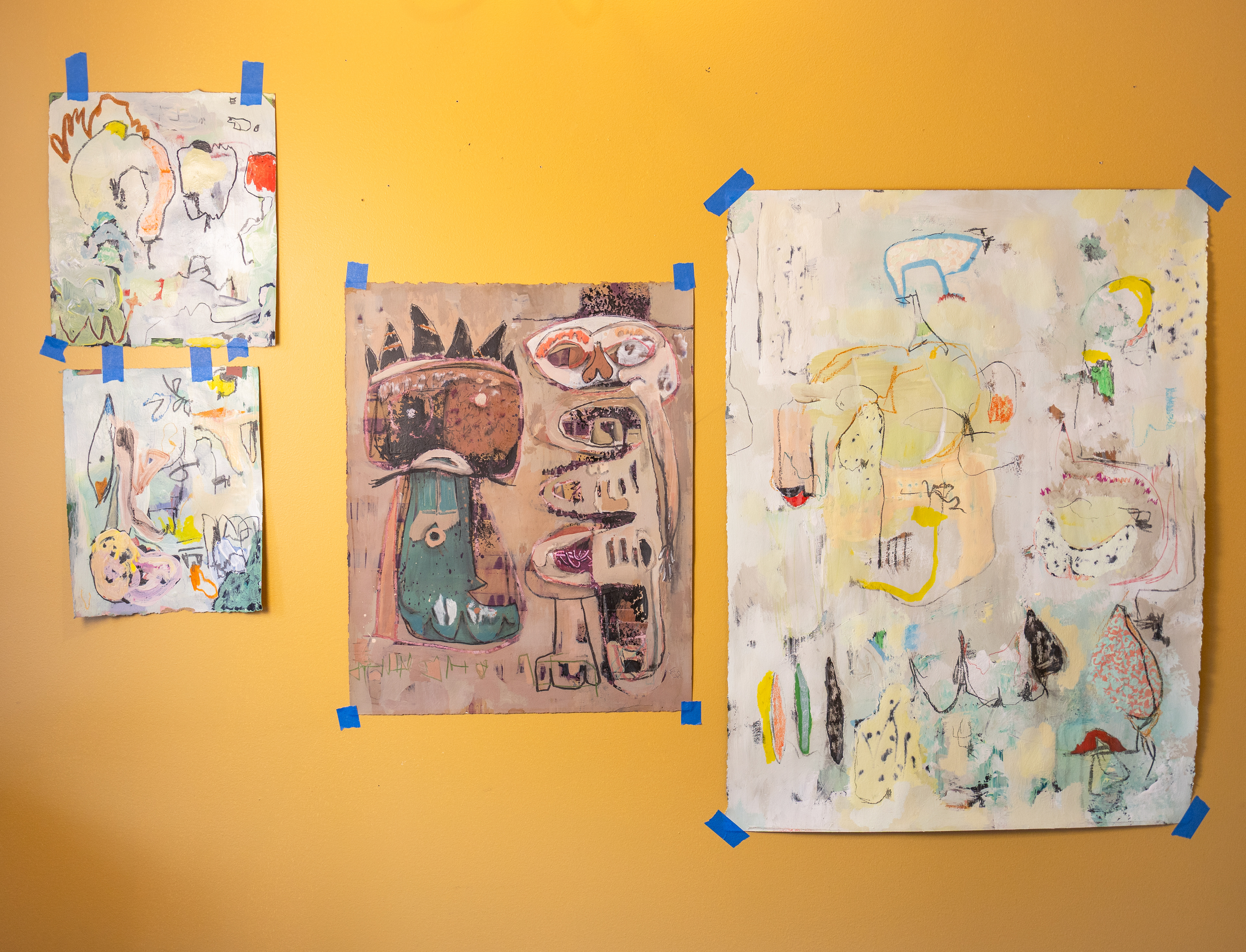
A collection of Shropshire’s mixed media paintings taped to the wall of his studio.

Shropshire garnishes a dish comprising of garlic-roasted spaghetti squash, fresh herbs, chili relish and a soft-yolk egg on July 30 at the President’s Cottage.
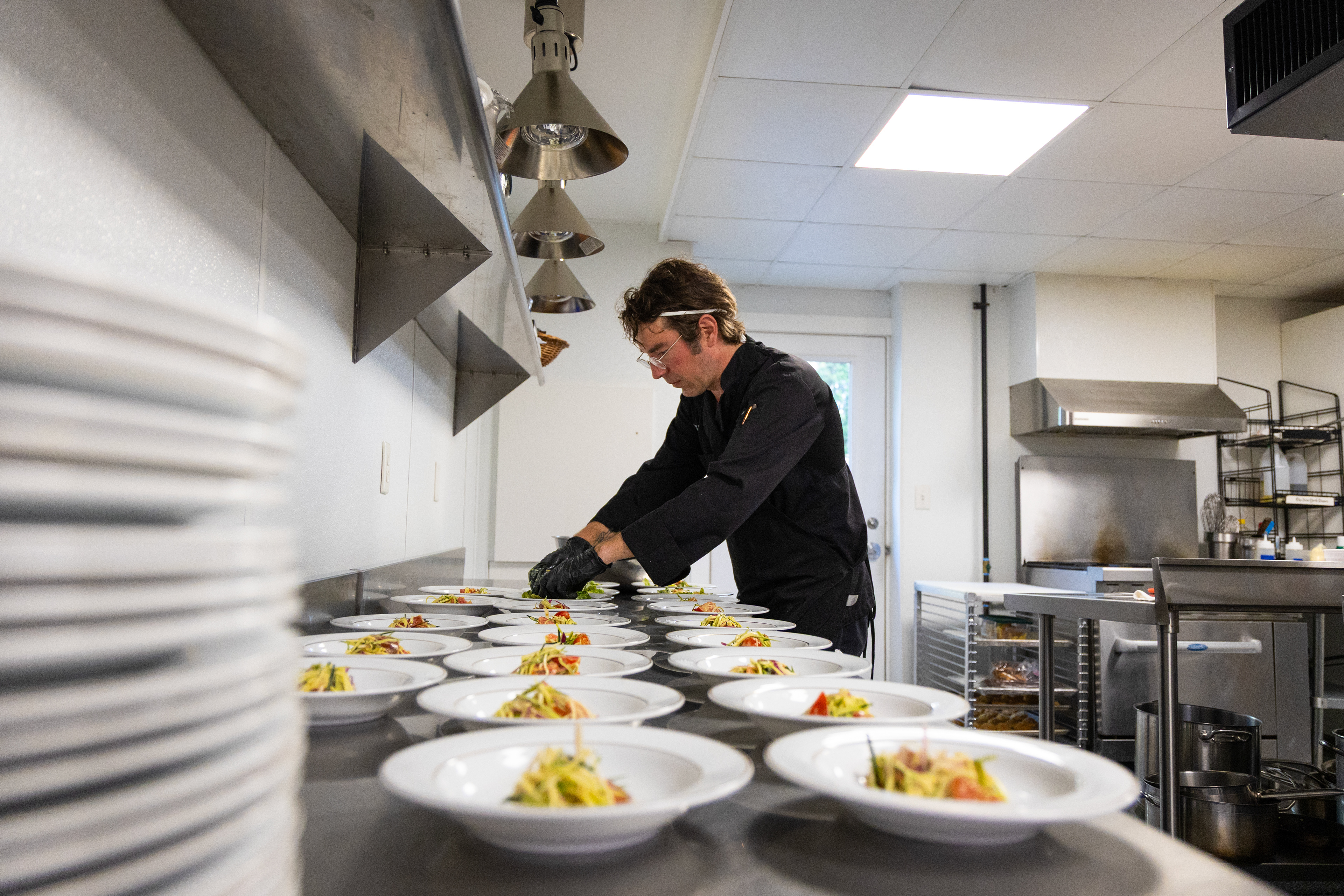
Shropshire plates a charred romaine salad with a curry vinaigrette, zucchini strings, cornbread croutons and maple nuts during July 23’s dinner service at the President’s Cottage.
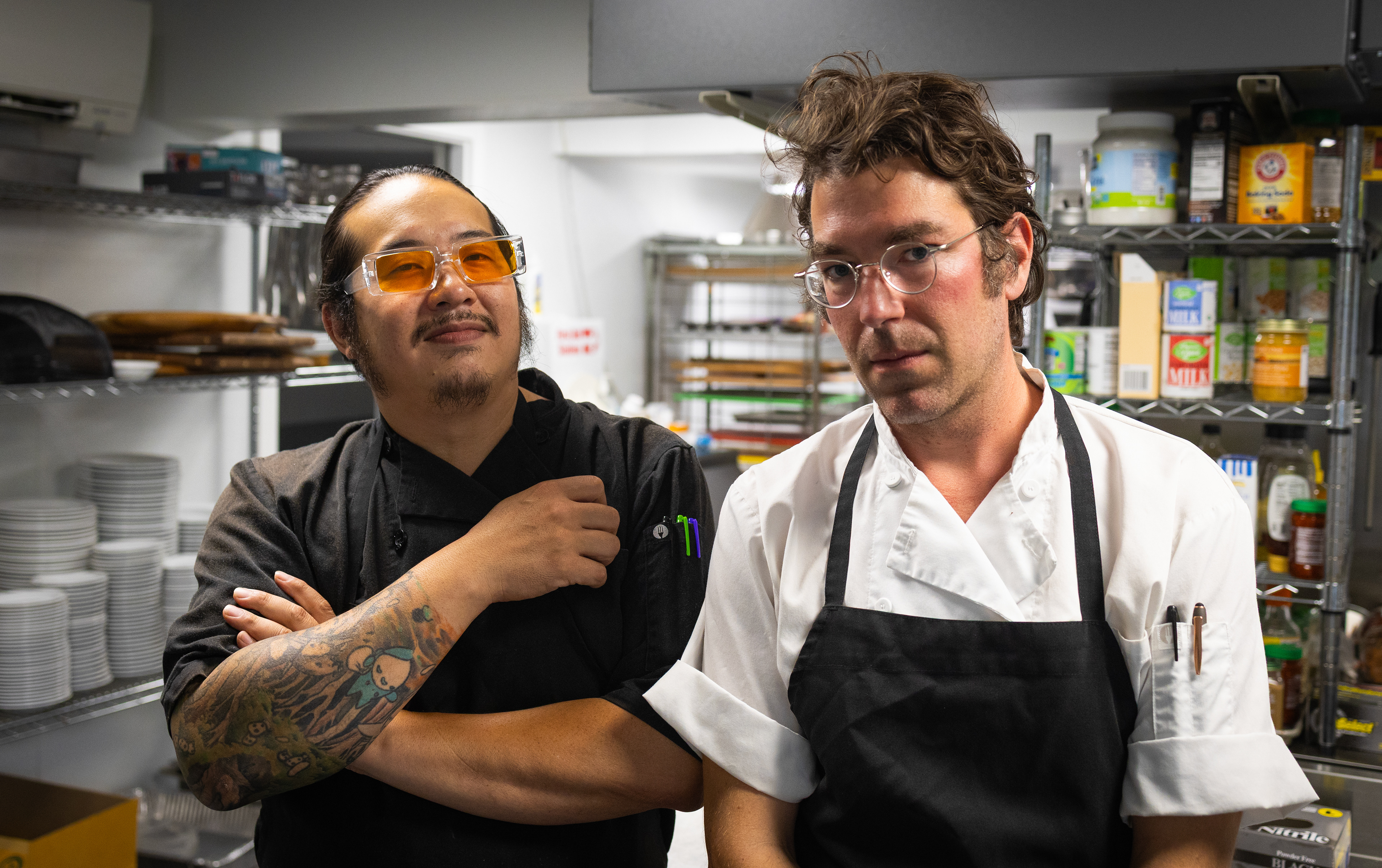
Wongprapan and Shropshire after a test plating on July 30, 2025 in the kitchen of the President’s Cottage.
The creative process seemingly never ends for President’s Cottage Executive Chef Ben Shropshire. With a focus on both culinary experimentation and laying a brush to canvas, Shropshire spends his summers in a constant flow of creativity.
Shropshire first came to Chautauqua in 2016 to work at the President’s Cottage; this is his sixth (non-consecutive) summer on the grounds.
At his side is the cottage’s sous chef, longtime friend Dan Wongprapan — whom he met in 2010 while working in a tapas kitchen in the Plaza Midwood neighborhood of Charlotte, North Carolina. The two developed an immediate bond and have been best friends ever since. They are now in their third summer together, composing intricate menus and providing smooth service for events at the cottage, which is by no means dark even without a Chautauqua Institution president this summer. The cottage still serves as the setting for regular receptions and dinners, with a rotating line-up of Institution trustees and executive staff, and Foundation directors, playing host.
While tasting their food is often limited to those private events, Chautauquans will have an opportunity to try Shropshire and Wongprapan’s dishes for themselves during an already sold-out guest chef dinner this Thursday in the Athenaeum Hotel. The five-course tasting menu — carefully curated by Shropshire and Wongprapan — features Asian-inspired dishes.
“When Dan and I are here for the summer, we always crave Asian food and there’s not many options for that, so we made a very accessible, semi-Asian menu for people who maybe feel the same as us,” Shropshire explained. This event is part of the Chef Series presented by the Athenaeum, which hosts various guest chefs throughout Week Nine.
At the beginning of the season, Shropshire and Wongprapan found themselves not only in the kitchen of the President’s Cottage but in the kitchen of the Greene Family Commons, the building in which Schools of Performing and Visual Arts students reside. There, the two provided guidance and training to a primarily younger kitchen staff, which was found to be especially helpful during busy first weeks of the season.
After his time in the kitchen for the day is over, Shropshire returns to his apartment — which doubles as his studio — and paints until he falls asleep. As a vivid dreamer, he uses symbols and motifs that he experiences while dreaming in his work.
“Dreams are important to me, maybe more important than most things,” he said.
As a mixed media artist, he primarily uses acrylic paint, oil pastel and pen and ink to portray elements of his dreams, such as boot silhouettes and archways.
Shropshire also documents his art on Instagram (@bens101010) in addition to participating in exhibitions in Charlotte — though, upon the conclusion of this season, both Shropshire and Wongprapan are moving to Louisville, Kentucky, where they’ll be working as private chefs.
There are obvious connections between the visual beauty he creates while both plating a dish during a dinner service or putting down a line of paint on a canvas. However, Shropshire enjoys the freedom from time constraints while in his studio. Despite this contrast, he explained that his instincts are an important factor in both sides of his work: “I feel most comfortable working on instinct, because I trust it.”